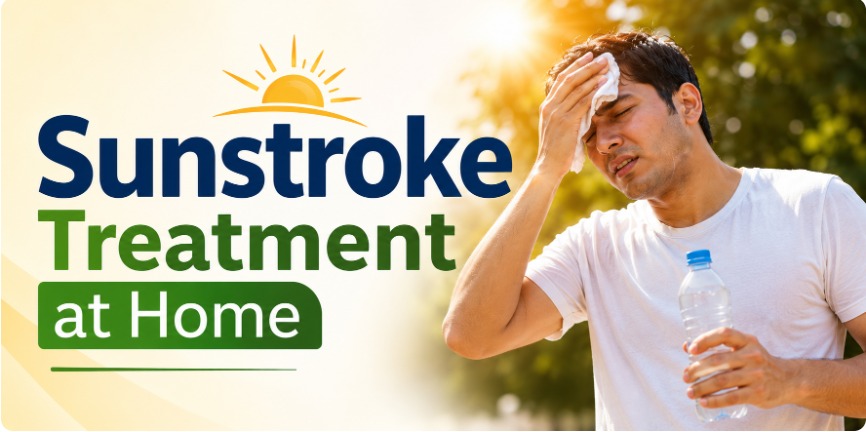
During extreme summer heat in Kolkata and other parts of West Bengal, cases of dehydration and heat stroke often increase rapidly. Sunstroke Treatment at Home may provide important first aid support during the early stage, especially when symptoms develop after dehydration or excessive sun exposure.
Also known as heat stroke, this condition occurs when the body can no longer regulate its temperature properly, potentially affecting vital organs. Immediate cooling and proper hydration may help reduce risks, but warning signs such as confusion, unconsciousness, or breathing difficulty require urgent medical attention to avoid severe complications.
What Is Sunstroke and Why Does It Happen?
Sunstroke is a serious heat-related condition that happens when the body is exposed to excessive sunlight or high temperatures for a long time and can no longer cool itself properly. In simple terms, it develops when the body temperature rises faster than the natural cooling system can manage. This condition is also known as Heat Stroke and is considered a medical emergency if symptoms become severe.
The body normally cools itself through sweating, but prolonged heat exposure and fluid loss can disturb this process. When dehydration occurs, the body loses the ability to regulate temperature effectively. As a result, internal body heat builds up, which may affect the brain, heart, and other organs if immediate care is not provided.
Symptoms of Sunstroke You Should Never Ignore
The symptoms of sunstroke in adults may begin slowly after prolonged exposure to high temperatures or direct sunlight. In some cases, signs can appear suddenly and become serious within a short time. Early identification is important because untreated heat-related illness can quickly affect the body’s normal temperature control and overall health.
Common symptoms of sunstroke may include:
- Dizziness or light-headedness, especially after staying outdoors in strong sunlight
- Nausea or a feeling of sickness, sometimes followed by vomiting
- Extreme weakness or unusual tiredness without heavy physical activity
- High body temperature with skin feeling hot to the touch
- Headache and throbbing discomfort, often linked with dehydration
- Heavy sweating in the early stage, followed by dry or warm skin in severe cases
- Muscle cramps and body discomfort caused by fluid loss
- Confusion, irritability, or difficulty concentrating
- Fast heartbeat and rapid breathing
- Unconsciousness or fainting in severe cases
If these symptoms become severe or continue for a long time, immediate medical attention is important , as severe sunstroke can become a medical emergency.
Sunstroke Treatment at Home: 7 Immediate Steps
When a person shows signs of Sunstroke, quick first aid can help reduce the risk of serious complications. Sunstroke Treatment at Home may provide important support during the early stage, but close observation is necessary because heat-related illness can worsen suddenly. The following immediate steps are commonly recommended before professional medical care becomes available.
Step 1: Move the Person to a Cool Place
The first step is to move the person away from direct sunlight immediately. A shaded area, air-conditioned room, or a place with proper airflow can help reduce heat exposure. Avoid keeping the person outdoors, even for a short period, as continued exposure to extreme heat may raise body temperature further and increase the risk of complications.
Step 2: Help Lower Body Temperature
Cooling the person early is important. Use a fan, keep the room well ventilated, and allow the person to rest in a cooler environment. If possible, place them under a ceiling fan or near an open window. Lowering body temperature quickly may help prevent worsening symptoms such as confusion, weakness, or severe discomfort.
Step 3: Support Hydration Carefully
If the person is awake and able to swallow normally, offer small amounts of water, ORS (Oral Rehydration Solution), or electrolyte-rich fluids slowly. Proper hydration may help replace fluids lost through excessive sweating. Avoid caffeinated, sugary, or alcoholic drinks, as these may worsen dehydration instead of helping the body recover naturally.
Step 4: Apply Wet Cloth or Cold Compress
Place a damp cloth on the forehead, neck, underarms, and wrists to help cool the body gradually. These areas release heat faster because blood vessels are located closer to the skin. Replace the cloth every few minutes to maintain cooling. Extremely cold or icy water is usually avoided because sudden temperature changes may cause discomfort.
Step 5: Remove Tight or Heavy Clothing
Loosen or remove unnecessary clothing so excess heat can escape more easily. Tight garments, layered clothing, or heavy fabrics may trap heat and make the condition worse. Lightweight cotton clothing allows better airflow and supports the body’s natural cooling process while the person rests indoors.
Step 6: Allow Proper Rest and Monitor Condition
The person should rest in a comfortable position and avoid physical activity. Rest helps the body recover from overheating and dehydration. During this time, monitor symptoms closely for warning signs such as vomiting, increasing dizziness, unusual behavior, or worsening weakness. Symptoms that continue or become severe may require urgent medical evaluation.
Step 7: Watch for Emergency Warning Signs
Some cases of severe Heat Stroke can become dangerous very quickly and should not be managed only at home. Immediate medical attention is necessary if the person becomes confused, faints, develops breathing difficulty, stops sweating, or experiences seizures. These warning signs may indicate a serious medical emergency requiring urgent hospital care.
How to Avoid Sunstroke in Summer
Sunstroke can often be prevented by following a few practical precautions during the summer season. Long exposure to direct sunlight, dehydration, and extreme heat can increase the risk of heat-related illness, especially for children, older adults, and people who work outdoors. Taking preventive steps early can help the body stay cool and reduce the chance of serious complications.
- Drink enough water throughout the day to prevent dehydration, even if you do not feel thirsty
- Include ORS or electrolyte-rich fluids during very hot days or after spending time outdoors
- Avoid going outside during peak afternoon hours, especially between 12 PM and 4 PM.
- Wear loose, light-coloured cotton clothes that allow air circulation and reduce heat absorption.
- Use an umbrella, cap, or scarf when stepping out in strong sunlight.
- Ensure elderly family members and children stay in cool indoor spaces during extreme heat.
- Take regular rest breaks if working outdoors for long periods
When to Visit Nursing Home
Delaying treatment during severe heat stroke may increase the risk of complications affecting the brain, heart, and kidneys. In some cases, Heat Stroke may require immediate observation, IV fluids, and continuous monitoring to prevent serious complications. At a nursing home, patients experiencing heat-related emergencies can receive timely evaluation and supportive care from experienced healthcare professionals. Early medical support can help reduce health risks and improve recovery. For elderly individuals, children, and people with existing medical conditions, quick access to professional care is especially important during extreme summer heat.
Why Choose Healthcare Nursing Home?
During extreme summer heat, conditions like Heat Stroke, dehydration, dizziness, and sudden weakness may become serious without timely medical attention. At Healthcare Nursing Home, patients receive prompt care and supportive treatment from experienced healthcare professionals. With proper monitoring facilities and emergency support, the focus remains on ensuring safe, comfortable, and patient-centred care during heat-related medical emergencies.
- Experienced Support During Summer Heat Emergencies
- Immediate Observation for High-Risk Patients
- Experienced Medical Team
- Emergency Support Available
- Patient Monitoring Facility
- Quick First Aid & Supportive Care
- Patient-Centred Healthcare Services
Conclusion
Sunstroke should never be ignored, especially during extreme summer temperatures. Early first aid at home may help reduce body temperature and support hydration during the initial stage. However, severe symptoms such as confusion, unconsciousness, breathing difficulty, or persistent high fever require immediate medical attention. Quick response and timely healthcare support can help prevent serious complications and support safer recovery during heat-related emergencies.
Recent Posts
-
Meet the Wanderer Tail Bag: Your Ultimate
May 16, 2026 -

Meet the Wanderer Tail Bag: Your Ultimate
May 14, 2026 -
Meet the Wanderer Tail Bag: Your Ultimate
May 14, 2026