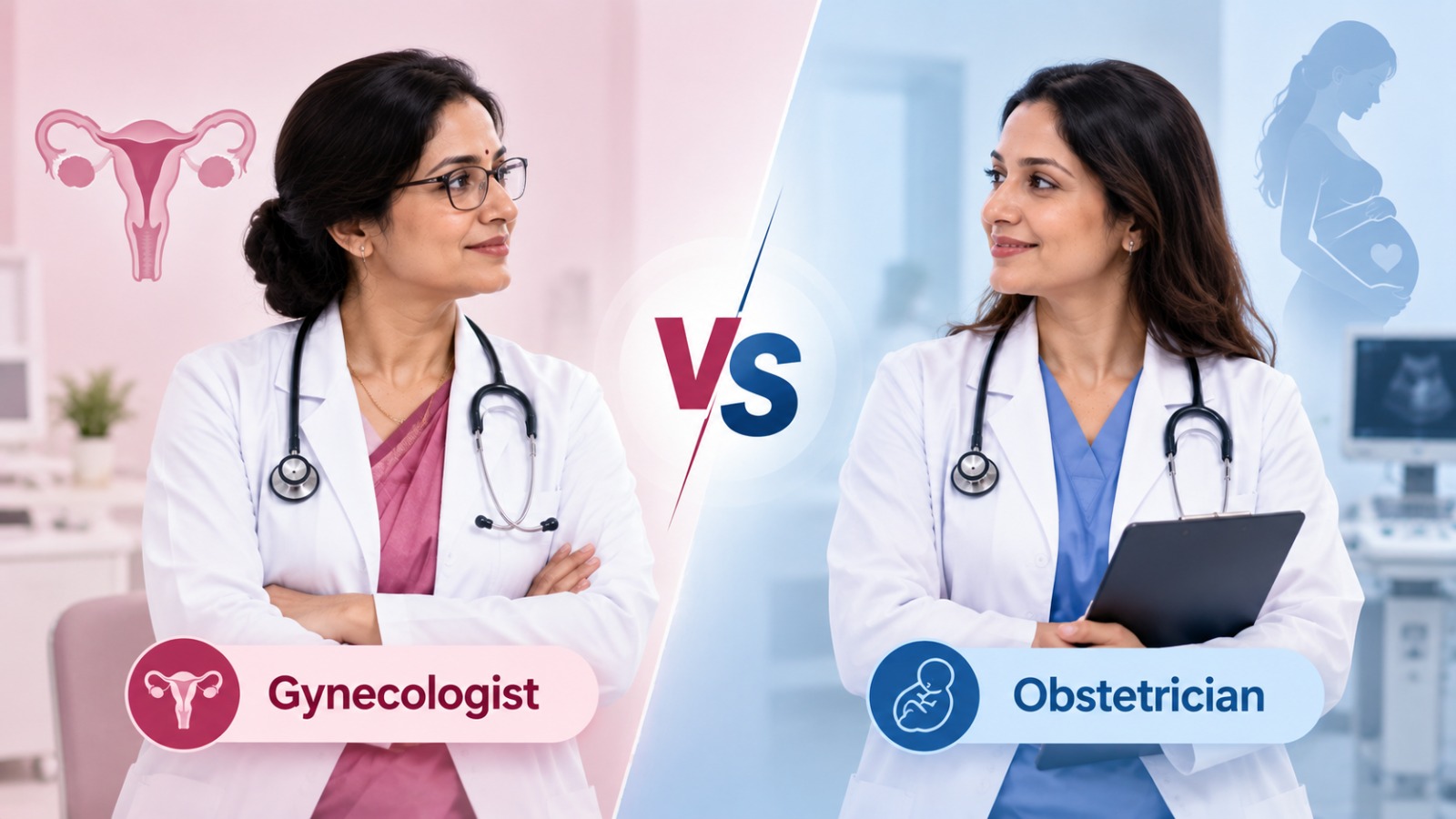
Not sure whether you should see a gynecologist or an obstetrician? Although these two medical specialties are closely related, they focus on different aspects of women’s health. A gynecologist primarily cares for the female reproductive system, while an obstetrician specializes in pregnancy, childbirth, and related care.
Many doctors are trained in both specialties and are called OB-GYNs obstetrician-gynecologists. If you are wondering which doctor is right for you, the answer usually depends on whether you need general gynecological care, are planning a pregnancy, or are already pregnant.
Gynecologist vs Obstetrician at a Glance
| Your Health Need | Usually the Appropriate Specialist |
|---|---|
| Irregular or painful periods | Gynecologist |
| Heavy or abnormal bleeding | Gynecologist |
| PCOS or other reproductive health concerns | Gynecologist |
| Pelvic pain | Gynecologist |
| Endometriosis or fibroids | Gynecologist |
| Contraception or family planning | Gynecologist / OB-GYN |
| Planning a pregnancy | Gynecologist / OB-GYN |
| Confirmed pregnancy | Obstetrician / OB-GYN |
| Prenatal care | Obstetrician / OB-GYN |
| Pregnancy-related complications | Obstetrician |
| Labour and delivery | Obstetrician / OB-GYN |
The right specialist may vary depending on your symptoms, medical history, pregnancy status, and individual healthcare needs.
Gynecologist vs Obstetrician: What Is the Main Difference?
The main difference between these two specialists lies in the type of medical care they provide. Gynecological care covers a wide range of reproductive health concerns, from menstrual problems and hormonal conditions to contraception, fertility evaluation, and menopause-related changes.
The National Center for Biotechnology Information (NCBI), in its chapter on Female Reproductive System Terminology, explains that gynecology focuses on the female reproductive system, whereas obstetrics deals with pregnancy, labour, and childbirth. It also distinguishes between the roles of gynecologists and obstetricians based on their respective medical specialities.
Obstetric care, on the other hand, focuses on pregnancy-related needs. This includes monitoring the progress of pregnancy, assessing potential complications, providing care during labour and delivery, and supporting recovery after childbirth.
What Is a Gynecologist?
A gynecologist is a doctor who specializes in women's reproductive health. Gynecological care can involve the reproductive organs, menstrual health, contraception, fertility concerns, and other conditions affecting reproductive health.
A gynecologist may also provide preventive care and evaluate symptoms that affect your daily life. Depending on your age, symptoms, medical history, and individual needs, your doctor may recommend examinations or screening tests.
What Does a Gynecologist Treat?
Women may consult a gynecologist for concerns such as:
- Irregular or painful periods
- Abnormal bleeding
- PCOS
- Endometriosis
- Fibroids
- Ovarian cysts
- Pelvic pain
- Vaginal or reproductive health concerns
- Fertility and family planning
- Contraception
- Menopause-related concerns
A gynecologist can also help determine whether a symptom needs further investigation or referral to another specialist.
If you are experiencing any of these gynecological concerns, consulting an experienced doctor can help you understand the cause and choose the right course of care. For people who live locally, having access to a trusted doctor or nearby nursing home can make consultations and follow-up visits much easier. This can be particularly convenient for women living in and around Dumdum who are looking for a Gynecologist in Dumdum, as choosing a specialist close to home can make ongoing care more accessible.
What Is an Obstetrician?
An obstetrician is a doctor who specializes in pregnancy and childbirth. They provide medical care throughout pregnancy and help manage concerns that may arise before, during, or after delivery.
What Does an Obstetrician Do During Pregnancy?
- Prenatal checkups
- Monitoring pregnancy progress
- Pregnancy-related tests and assessments
- Management of pregnancy complications
- Labour and delivery
- Postpartum care
For pregnancies that require additional specialist support, an obstetrician may also coordinate care with other appropriate specialists. For example, maternal-fetal medicine specialists are OB-GYNs who specialize in high-risk pregnancies.
What Is an OB-GYN?
OB-GYN stands for obstetrician-gynecologist. These doctors receive specialized training in both obstetrics and gynecology, allowing them to provide reproductive health care as well as pregnancy-related services. However, the specific services offered may vary depending on their area of practice.
When Should You See a Gynecologist or Obstetrician?
The easiest way to choose between a gynecologist and an obstetrician is to consider why you need medical care.
When to See a gynecologist:
- Your menstrual cycle changes unexpectedly or becomes irregular.
- Period pain or bleeding starts affecting your daily activities.
- You experience persistent pelvic discomfort.
- You have questions about contraception or reproductive health.
- You want to discuss pregnancy planning or menopause-related changes.
- You need a routine gynecological consultation.
If a problem is outside the doctor's area of practice, they can advise whether another specialist or additional evaluation is appropriate.
When to See an Obstetrician:
An obstetrician is a doctor who specializes in pregnancy and childbirth. They provide medical care throughout pregnancy and help manage concerns that may arise before, during, or after delivery.
- Care after confirming pregnancy
- Prenatal monitoring
- Assessment of pregnancy-related concerns
- Management of pregnancy complications
- Labour and delivery care
- Postpartum obstetric care
Pregnancy care can involve different healthcare professionals depending on the healthcare system, pregnancy, and individual needs.
Planning Pregnancy? Which Doctor Should You See?
If you are planning a pregnancy, a gynecologist or OB-GYN can be a suitable starting point for discussing your reproductive health and pregnancy plans.
A pre-pregnancy consultation may provide an opportunity to discuss your medical history, reproductive health, medications, and other factors that may be relevant to pregnancy.
Once pregnancy is confirmed, arrange your first prenatal appointment with an appropriate healthcare professional. Regular prenatal checkups help monitor the pregnancy and identify any concerns that may require medical attention.
How to Choose the Right Gynecologist or Obstetrician?
Choosing a women's health specialist is not only about the title of the doctor. Consider:
- Medical qualifications and relevant training
- Experience with your particular health concern
- Whether the doctor provides the type of care you need
- Availability for follow-up appointments
- Hospital or diagnostic facilities when required
- Experience with pregnancy care if you are pregnant
- Whether you feel comfortable asking questions and discussing your concerns
Clear communication is an important part of good medical care. Patients should be able to understand their options, ask questions, and participate in decisions about their care.
Choosing a healthcare provider for pregnancy involves considering your health needs, potential pregnancy risks, and childbirth preferences. MedlinePlus, a service of the U.S. National Library of Medicine, discusses different healthcare providers involved in pregnancy and
childbirth, including obstetricians, family physicians, and certified nurse-midwives. Its guide, Choosing the Right Health Care Provider for Pregnancy and Childbirth, also explains important factors to consider when selecting a pregnancy care provider.
Finding the Right Gynecological Care in Dumdum
Women looking for gynecological care in Dumdum can explore the consultation and treatment services available at Health Care Nursing Home. The facility provides access to gynecological consultations for women seeking guidance about their reproductive health and related concerns.
To learn more about the available services, doctors, and consultation options, visit our Gynecologist in Dumdum service page.
Women's Gynecological Health: Care at Every Life Stage
Women's reproductive health needs can change throughout life—from adolescence and menstrual health to reproductive years, pregnancy planning, postpartum care, perimenopause, and menopause.
Regular and appropriate gynecological care can help women understand changes in their reproductive health and seek medical attention when needed.
For a broader guide to preventive care, routine checkups, and women's health at different life stages, explore our Women’s Gynecological Health Guide
Frequently Asked Questions
Medical note: This article is for general health information and does not replace an individual medical evaluation. The appropriate specialist can depend on your symptoms, medical history, pregnancy status, and the services available from the doctor.
Recent Posts
-

Irregular Periods: Causes & Symptoms
May 16, 2026 -

Common Gynecological Problems by Age
May 14, 2026 -

Pelvic Pain in Women: Causes & Warning Signs
May 14, 2026