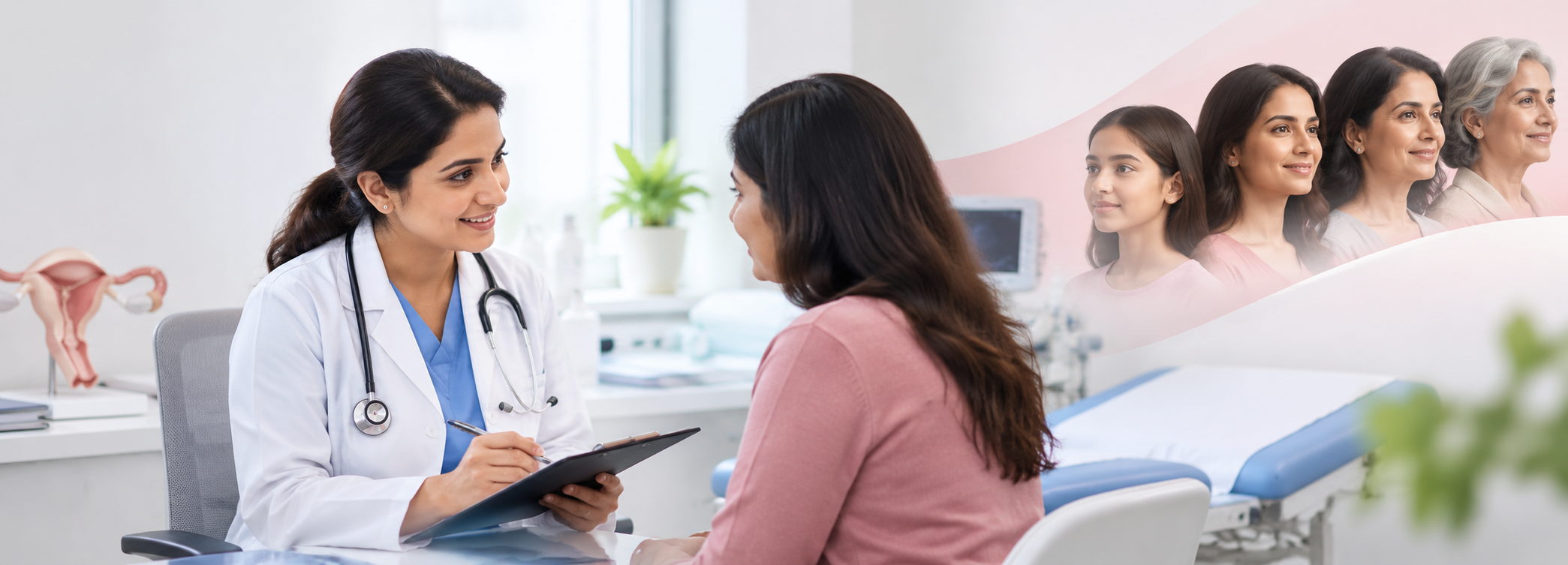
Irregular periods, painful periods or unusual bleeding can worry women at any age. Are these symptoms always normal? Sometimes, they may need medical attention.
Gynecological problems can change with age and life stage. The common gynecological problems in the teenage years may differ from those after menopause. Understanding these changes can help women recognise unusual symptoms.
A study published in PubMed Central (PMC), based on Global Burden of Disease (GBD) 2021 data, has highlighted an increasing burden of gynecological diseases among women of reproductive age. The study also found a notable rise in the prevalence of these conditions among younger women, particularly those aged 20–29 years. This highlights why understanding common gynecological problems and recognising unusual symptoms at an early stage is important.
This article explains common gynecological problems by age. It also covers warning symptoms, when to see a gynecologist and preventive care. Together, these can help you understand your gynecological health better.
Common Gynecological Problems by Age Group
Teenage Years — Ages 10–19
During the teenage years, menstrual cycles may take time to become regular. Common concerns include irregular periods, painful periods and heavy menstrual bleeding. Some teenagers may also develop symptoms associated with PCOS or vaginal infections, such as unusual discharge, itching or irritation.
If periods remain irregular, bleeding is unusually heavy, or pain interferes with daily activities, medical evaluation may be appropriate. Sunflower Hospital published article goes into detail about these issues, in girls aged 10 to 19 years.
Women in Their 20s
Women in their 20s may experience menstrual and hormonal concerns such as PCOS, endometriosis, ovarian cysts, vaginal infections and persistent pelvic pain. Endometriosis, in particular, can cause significant menstrual or pelvic pain.
Recurring pain, noticeable menstrual changes or persistent vaginal symptoms should be evaluated rather than self-diagnosed.
Women in Their 30s
PCOS and endometriosis may continue to affect women in their 30s. Fibroids, heavy menstrual bleeding and fertility concerns may also become relevant during this stage.
Fibroids are non-cancerous growths in or around the uterus. They may cause heavy bleeding, pelvic pressure or other symptoms, although some women have no symptoms.
Women experiencing difficulty conceiving or persistent menstrual or pelvic symptoms can discuss these concerns with a healthcare professional.
Women in Their 40s
Hormonal and menstrual changes may become more noticeable during the 40s. Perimenopause, the transition toward menopause, can cause changes in cycle length, bleeding patterns and period frequency.
Fibroids, endometriosis and other existing gynecological conditions may also continue to cause symptoms. Unusual or persistent bleeding should not automatically be assumed to be part of perimenopause and may require medical evaluation.
Women After Menopause
According to Cleveland Clinic menopause usually happens around age 52. The exact timing can differ from one woman to another. The article also points out that women can experience changes after menopause, such as
Night sweats and heavy sweating while sleeping, Vaginal dryness because estrogen levels fall, Pain during sex, Less moisture in the skin, Physical changes, such, as gaining or losing weight, Thinning hair and hair loss.
When Should You See a Gynecologist?
Not every menstrual or vaginal change indicates a gynecological condition. However, symptoms that persist, become more frequent, interfere with everyday life or appear unexpectedly should be assessed by an appropriate healthcare professional.
Women dealing with ongoing menstrual problems, pelvic pain, vaginal symptoms, fertility concerns or menopause-related changes can consult a qualified gynecologist in Dumdum for appropriate evaluation and personalised care.
The reason for a consultation can vary from one person to another. Depending on the symptoms and individual health history, a healthcare professional may recommend observation, examination or further testing.
Common Gynecological Symptoms Women Should Not Ignore
Some symptoms may have different causes, but persistent or significant changes should not be ignored. These may include:
- Very heavy or prolonged menstrual bleeding
- Persistent pelvic or abdominal pain
- Bleeding between periods
- Unusual vaginal discharge
- Vaginal odor, itching or irritation
- Pain during intercourse
- Difficulty conceiving
- New pelvic pressure or a feeling of fullness
- Persistent urinary symptoms
The importance of a symptom can depend on factors such as age, menstrual status, medical history, severity and duration. If a symptom is persistent, recurrent or concerning, seeking professional medical advice is appropriate.
Preventive Gynecological Care at Every Age
Preventive gynecological care helps women stay informed about their menstrual, reproductive and hormonal health. Tracking menstrual patterns and paying attention to unusual symptoms can make it easier to recognise changes that may need medical attention.
Regular healthcare visits also provide an opportunity to discuss menstrual concerns, fertility, reproductive health and menopause-related changes. Screening and checkup recommendations can vary based on age, medical history and individual risk factors, so care should be tailored to each woman's needs.
For a broader understanding of preventive care, routine checkups and women's health at different life stages, explore our Women’s Gynecological Health Guide
Can Gynecological Problems Be Prevented?
Not every gynecological condition can be prevented. Conditions such as PCOS, endometriosis and fibroids can develop due to a combination of factors that may not be fully within an individual's control.
However, some healthy habits can support overall gynecological health. Maintaining a healthy lifestyle, following appropriate hygiene practices and seeking medical advice when symptoms change can help women manage their health more effectively.
The goal is not to prevent every possible condition, but to recognise changes early and seek appropriate care when needed.
Frequently Asked Questions
Common concerns include menstrual problems, PCOS, vaginal infections, endometriosis, fibroids, ovarian cysts and menopause-related symptoms. The type and frequency of concerns can vary according to age and individual health circumstances.
Yes. Different life stages can bring different gynecological concerns. Menstrual problems may be more relevant during adolescence and the reproductive years, while perimenopause and menopause-related changes become more relevant later in life. Some conditions can occur across multiple age groups.
No. Menstrual cycles can vary, particularly when periods first begin and during the transition toward menopause. However, persistent or significant irregularity should be discussed with a healthcare professional to determine whether evaluation is appropriate.
Medical advice may be appropriate for persistent pelvic pain, unusually heavy or prolonged bleeding, bleeding between periods, unusual vaginal symptoms, fertility concerns or new symptoms after menopause. Any postmenopausal bleeding should be medically assessed.
Several gynecological and urinary symptoms can occur after menopause, including vaginal dryness and urinary concerns. However, new or unusual symptoms should not automatically be considered a normal part of aging. Postmenopausal bleeding requires medical evaluation.
Conclusion
Gynecological health is a lifelong process that changes from the teenage years through the reproductive years, the 30s and 40s, and into menopause and later life. The concerns experienced at one stage may differ from those seen at another.
Understanding menstrual patterns, recognising unusual symptoms and seeking appropriate healthcare can support women's gynecological health at every age. Persistent or unusual symptoms should not simply be dismissed as “normal for your age.” Professional evaluation can help identify the appropriate next step when a gynecological concern arises.
Recent Posts
-
Irregular Periods: Causes & Symptoms
May 16, 2026 -
Gynecologist vs Obstetrician: Key Differences
May 14, 2026 -
Pelvic Pain in Women: Causes & Warning Signs
May 14, 2026