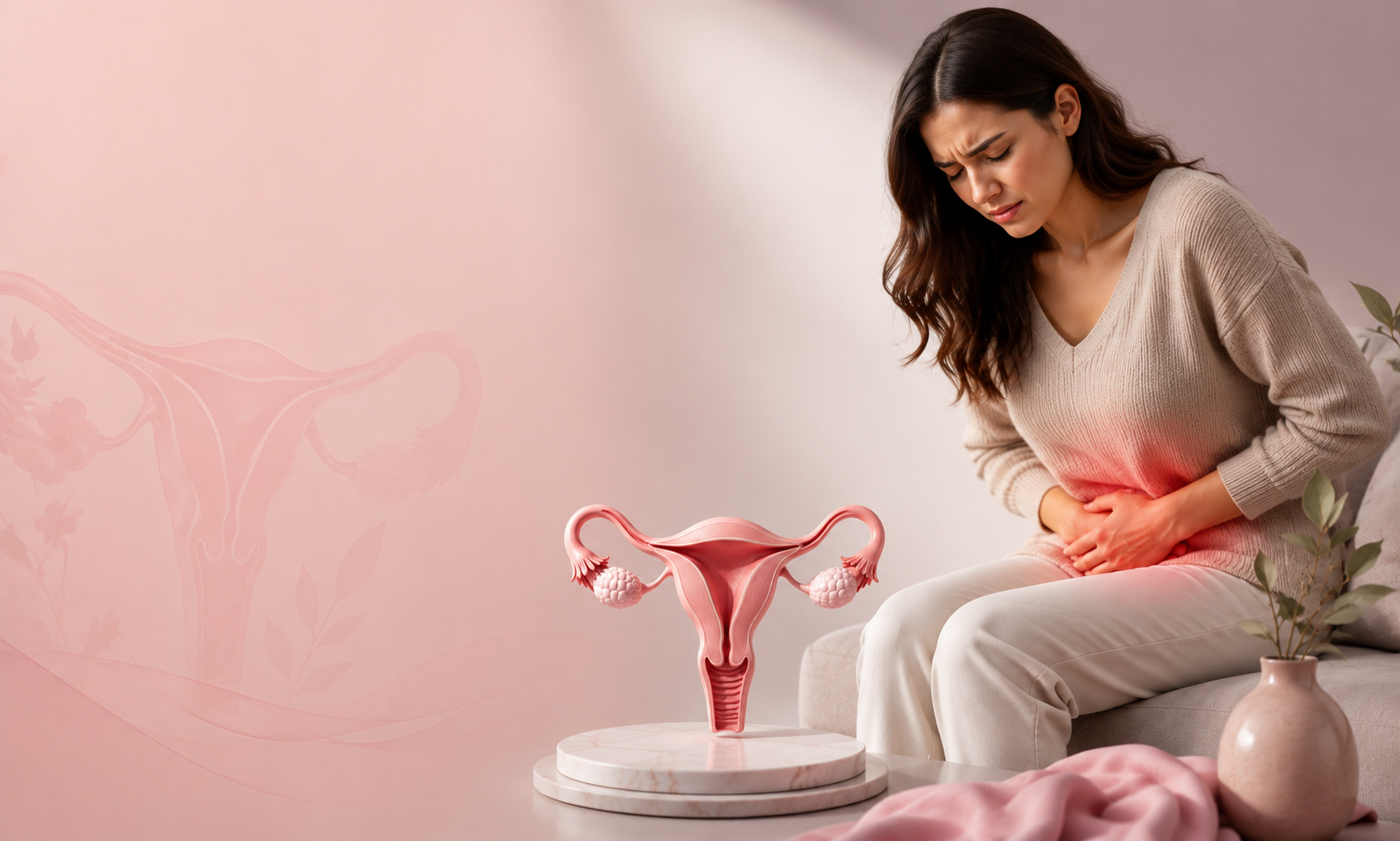
Pelvic pain in women can be mild and temporary, but it can also be linked to conditions that need medical attention. Menstrual cramps, ovulation, ovarian cysts, endometriosis, pelvic infections, urinary problems, and digestive conditions are some possible causes.
But how can you tell when pelvic pain may be a normal part of your menstrual cycle and when it needs medical evaluation? The answer depends on the pain’s severity, duration, timing, and the symptoms that occur with it.
In this guide, we explain the common causes of pelvic pain in women, what different pain patterns may mean, the warning signs you should not ignore, and when it is important to see a doctor.
What Is Pelvic Pain?
Pelvic pain is discomfort or pain felt in the lower abdomen and pelvic area, usually below the belly button and between the hips. It may feel like a dull ache, pressure, cramping, burning, or sharp pain. The pain can be constant or may come and go.
What Are the Symptoms of Pelvic Pain?
The symptoms of pelvic pain can vary depending on the underlying cause. Some women experience mild cramping, while others may notice sharp pain, pressure, or persistent discomfort in the lower abdomen.
Common symptoms associated with pelvic pain include:
- Dull, aching, or sharp pain in the lower abdomen
- Cramping around menstruation
- Pain on one side of the pelvis
- A feeling of pressure or heaviness in the pelvic area
- Pain during urination or bowel movements
- Pain during or after sex
- Lower back discomfort alongside pelvic pain
- Pelvic pain accompanied by unusual vaginal bleeding or discharge
The timing, location, severity, and duration of these symptoms can help a healthcare professional assess possible causes. However, symptoms may overlap across different conditions, so they cannot confirm a diagnosis on their own.
Understanding Different Pelvic Pain Patterns
| Pain Pattern | Possible Association | When to Seek Medical Advice |
|---|---|---|
| Cramping around menstruation | Menstrual pain | If the pain is severe, worsening, or disrupts daily activities |
| One-sided pain around mid-cycle | Ovulation pain may be one possibility | If the pain is severe, persistent, or unusual |
| Recurrent pain during periods | Endometriosis or other gynaecological conditions | If the pain keeps returning or becomes more severe |
| Pelvic pressure or heaviness | Fibroids or other pelvic conditions | If symptoms persist or occur with unusual bleeding |
| Pain during urination | Urinary or bladder-related problems | If accompanied by fever, blood in the urine, or worsening symptoms |
| Pain during bowel movements or sex | Digestive or gynaecological conditions | If the pain recurs or affects daily life |
These patterns can provide useful clues, but they do not identify the exact cause of pelvic pain. A healthcare professional can recommend an appropriate evaluation based on the symptoms and medical history.
Where Can Pelvic Pain Occur?
Pelvic pain can be felt in different areas of the lower body, depending on its possible cause. It may occur in:
- Lower abdomen
- One side of the pelvis
- Centre of the pelvis
- Lower back
- Pain that spreads toward the thighs
The location of pelvic pain alone cannot determine its exact cause, as different conditions can cause similar symptoms.
What Causes Pelvic Pain in Women?
Pelvic pain has many possible causes. The following are some of the more common ones.
1. Menstrual Cramps
Menstrual cramps are a common cause of pelvic pain. They occur when the uterus contracts during menstruation. The pain may feel crampy or aching and can sometimes extend into the lower back or thighs.
Mild, predictable cramps around a period may be normal. But pain that becomes progressively worse or regularly disrupts daily life deserves medical evaluation because conditions such as endometriosis, fibroids, or adenomyosis can also cause painful periods.
2. Ovulation Pain
Some women experience temporary pelvic pain around ovulation, known as mittelschmerz. It may occur around the middle of the menstrual cycle and can affect one side of the lower abdomen.
Ovulation pain is generally short-lived. If the pain is severe, persistent, or occurs at unexpected times, it is important not to assume that ovulation is the cause.
3. Endometriosis
Endometriosis occurs when tissue similar to the lining of the uterus grows outside the uterus. It can cause pelvic pain, particularly around menstruation, and may also be associated with pain during sex or bowel movements.
Pain associated with endometriosis can become chronic and may significantly affect daily activities. Persistent or unusually severe period pain should therefore be discussed with a healthcare professional rather than automatically being considered “normal.”
4. Adenomyosis
Adenomyosis occurs when tissue that normally lines the uterus grows into the muscular wall of the uterus. It can contribute to painful periods and pelvic discomfort.
When pelvic pain occurs together with unusually painful or heavy periods, a healthcare professional may consider conditions such as adenomyosis, endometriosis, or fibroids as part of the evaluation.
5. Ovarian Cysts
Ovarian cysts are fluid-filled sacs that develop in or on an ovary. Many ovarian cysts do not cause symptoms, but some can cause pelvic pain or pressure.
The pain may be felt more strongly on one side. Sudden severe pelvic pain, particularly when accompanied by nausea or vomiting, needs prompt medical assessment because some ovarian problems can require urgent care.
6. Pelvic Inflammatory Disease (PID)
Pelvic inflammatory disease is an infection affecting the female reproductive organs. It can cause lower abdominal or pelvic pain and may occur along with symptoms such as abnormal vaginal discharge, fever, or pain during urination or sex.
Early medical evaluation is important because untreated reproductive-tract infections can lead to complications.
7. Urinary Problems
Pelvic discomfort can sometimes originate in the urinary system. Urinary tract infections, bladder conditions, kidney stones, and other urinary problems can cause pain or pressure in the pelvic or lower abdominal region.
Symptoms such as burning while urinating, needing to urinate frequently, blood in the urine, or fever can provide important clues about the possible source of the pain.
8. Fibroids and Other Causes
Uterine fibroids are noncancerous growths in the uterus. They may cause pelvic pressure or pain and can also be associated with heavy menstrual bleeding.
Pelvic pain can also come from digestive problems, pelvic floor muscles, connective tissues, nerves, or other conditions. This is why the location and pattern of the pain alone cannot reliably identify its cause.
Pelvic Pain During Pregnancy
Pelvic pain during pregnancy can have several possible causes. Mild discomfort may occur as the body changes during pregnancy, but severe or persistent pain, vaginal bleeding, dizziness, fainting, or other concerning symptoms should be assessed promptly by a healthcare professional.
Normal Period Pain vs Pelvic Pain That Needs Evaluation
Mild, predictable cramps around your period or brief discomfort around ovulation can be a normal part of the menstrual cycle.
However, pelvic pain should be evaluated when it becomes more severe, keeps returning, gets worse over time, occurs outside your usual menstrual pattern, or starts affecting your daily activities. New or unexplained pelvic pain, especially when accompanied by unusual bleeding, discharge, urinary or bowel symptoms, or pain during sex, is also worth discussing with a healthcare professional.
Warning Signs of Pelvic Pain You Should Not Ignore
Some combinations of symptoms require prompt medical attention. Sudden or severe pelvic pain can sometimes indicate an urgent condition.
Seek urgent medical care if pelvic pain occurs with:
- Sudden, severe, or rapidly worsening pain
- Heavy or unusual vaginal bleeding
- Fever with significant pelvic pain
- Severe nausea or vomiting
- Fainting, marked dizziness, or other signs of feeling very unwell
- Pelvic pain during pregnancy or with a possible pregnancy
- Blood in the urine or stool together with significant pain
- Difficulty urinating or passing stool with severe pain
These warning signs do not mean that a particular condition is definitely present. They indicate that the symptoms should be assessed promptly rather than diagnosed at home.
When Should You See a Doctor for Pelvic Pain?
If pelvic pain keeps coming back, gets worse, or starts affecting your daily life, it is important to seek medical advice. Women looking for a gynecologist in dumdum can consult a specialist to understand the possible cause of their pain and discuss the next steps.
- Recurring Pain: If pelvic pain keeps coming back or lasts longer than expected, see a doctor.
- Worsening Pain: If the pain becomes more severe or changes from your usual pattern, seek advice.
- Daily Life Affected: See a doctor if pelvic pain interferes with sleep, work, exercise, or daily activities.
- Vaginal Changes: Seek medical advice if pain occurs with unusual vaginal bleeding or discharge.
- Urinary or Bowel Symptoms: Consult a doctor if pelvic pain occurs with new urinary or bowel problems.
- Pain During Sex: Recurring pain during or after sex should be discussed with a healthcare professional.
How Is the Cause of Pelvic Pain Diagnosed?
Diagnosis usually begins with questions about when the pain started, where it occurs, whether it follows your menstrual cycle, and what makes it better or worse. Depending on your symptoms, a doctor may recommend a physical examination, urine or blood tests, pregnancy testing when appropriate, or imaging such as an ultrasound. The tests depend on the suspected cause, as there is no single test that can diagnose every type of pelvic pain. To learn more about your body and important gynaecological health topics, explore our Women’s Gynecological Health Guide.
Frequently Asked Questions
Yes. Pelvic pain can occur outside menstruation because possible causes include ovulation, ovarian cysts, urinary conditions, digestive problems, endometriosis, and other pelvic conditions.
It can be. Endometriosis is one possible cause of chronic or recurrent pelvic pain, particularly when pain is associated with menstruation or certain activities. However, pelvic pain alone cannot confirm endometriosis.
Sudden or severe pelvic pain, especially when accompanied by heavy bleeding, fever, vomiting, fainting, or possible pregnancy, requires urgent medical assessment.
No. Pain in the lower abdomen or pelvic area cannot confirm pregnancy. Menstrual cramps, ovulation, urinary conditions, and other pelvic problems can cause similar discomfort. If pregnancy is possible, take a pregnancy test and seek medical advice when needed.
Weight gain does not necessarily cause pelvic pain. Weight changes can occur alongside hormonal or metabolic conditions, but persistent pain needs appropriate assessment to identify its possible cause.
Recent Posts
-
Irregular Periods: Causes & Symptoms
May 16, 2026 -
Common Gynecological Problems by Age
May 14, 2026 -

Gynecologist vs Obstetrician: Key Differences
May 14, 2026